
Reflections
Teaching Quality Standard
 |  |  |
|---|---|---|
 |  |  |
 |  |  |
Fostering Effective Relationships
I believe that developing relationships is one of the most important aspects of teaching. It's really important to me to act consistently with fairness, respect and integrity. I build relationships by finding ways to relate to the students, often using humour. I have spent time finding out specific things about their lives. My Field III school is very diverse and I have made a specific effort to speak with each child about their cultural background after reading each of their assignments for a Social Studies project. It is important to me to honour cultural diversity and promote intercultural understanding so that my students feel comfortable and confident in their classroom. I have built strong relationships, demonstrating empathy and a genuine caring, with students that are struggling socially, emotionally, and academically. I have also worked on developing relationships with the other teachers, the educational assistants I have worked with, the admin, and the other staff in the building. I had the opportunity to sit in on Parent-Teacher conferences in both Field II and Field III, as well as special meetings with parents about specific issues with students. I was able to collaborate with community service professionals in Field III when different issues arose with students. One student needed emotional support and we were able to connect her with the school psychologist and another students struggles with angry out bursts. In each scenario, we were able to work with the school and community experts to hopefully help the students find the support they will need. One of my strengths is demonstrating empathy and a genuine caring for others and I know it has helped me develop strong, meaningful relationships and makes me a better teacher.
 |  |  |
|---|---|---|
 |  |
Engaging in Career-Long Learning
As a mature student, I have demonstrated my commitment to life-long learning. I feel that it is so important to continually learn, grow and challenge my methods and my thinking. During Field III, I collaborated with my grade group teachers to build personal and collective professional capacities and expertise. One of the teachers gave me materials she had collected that she was no longer using and we met so she could share her extensive knowledge with me. I am always actively seeking out feedback to enhance my teaching practice, as evidenced by the feedback meetings my partner teachers and I would have every day. I also received feedback from students about their learning needs and changed lesson plans when my planned activity was not understood by the students. While in school and in practicum, I continue to read educational research and related literature to enhance my teaching practice and try to keep up with new developments in learning and education. I am very interested in integrating technology in the classroom in an effective and authentic manner and explored this idea further in my Design Thinking project. I hope to use some of our group findings in Field IV.
 |  |  |
|---|---|---|
 |  |  |
 |  |  |
 |  |  |
 |  |
Demonstrating a Professional Body of Knowledge
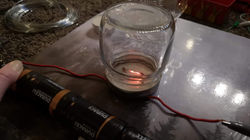
I have demonstrated my ability to teach a wide range of subject matters, as I was able to enthusiastically and expertly teach music, math, science, health, and art. I have demonstrated an ability to plan and design learning activities that meet learning outcomes in the program of study. My lesson plans include a wide range of instructional strategies, including direct teaching when appropriate, the effective use of technology, hands-on learning, written work, observational experiences, and inquiry based learning. My lesson plans consider the important student variables as my classes were diverse and had many different learning needs. I enjoyed creating lesson plans where the students were able to engage with the learning and understand the concept on a deeper level. I tried to find many different ways of doing this in my Grade Five Electricity unit, including making our own light bulb, making squishy circuity, creating circuit holiday cards, and engaging the students in a design-thinking project for the door decoration contest at the school. I engaged the students in daily check-ins to formatively assess learning and used this to guide the next days' lesson planning. I prepared the students for unit tests for summative assessment and gave students feedback in a timely manner so they were able to make changes and improve their understanding for future assessment.
Establishing Inclusive Learning Environments
As both of my Field Experience schools had very diverse learning needs, I was able to demonstrate my ability to foster and inclusive learning environment. All of my lesson plans included differentiation using both universal and targeted strategies for students with higher learning needs. I was able to provide opportunities for student leadership during our Grade Five design thinking door decorating project. I organized the students into smaller groups and assigned a group leader with specific strengths in the groups assigned area of design. One student in particular has strong art skills, but struggles academically, socially, and emotionally. I decided to assign group leaders in order to give this student a chance to shine in her area of strength and she exceeded expectations. With the assistance of my partner teacher and educational assistant, I was able to create small groups in Grade Five Math to provide targeted and specialized support where needed.
 |  |  |
|---|---|---|
 |  |  |
 |  |
 |
|---|
Applying Foundational Knowledge about First Nations, Metis, and Inuit
I feel strongly about the inclusion of the Indigenous ways of knowing in all areas of my teaching practice. The interdisciplinary project I helped design covers topics around the study of “land”, found in the Grade 6 Program of Studies for Alberta, from different perspectives (i.e. government, corporations, First Nations). In order for students to answer the question, they must have an in-depth understanding of the various perspectives regarding land ownership. An inquiry starts with posing a question with respect to an essential understanding or big idea. The big idea is: who should be making land-related decisions in Canada or who is the rightful owner/custodian of the land? Inquiry projects involve crafting questions that lead to deeper knowledge about society and citizenship creating an authentic learning experience.
Adhering to Legal Frameworks and Policies
My Law Paper and my Ethics Paper demonstrate my awareness of the requirements authorised under the School Act through the analysis of case studies and my application of the law, consistent with policies and procedures established by the school authority. As I have developed meaningful relationships with my students and had students confide in me with personal aspects of their lives, I have shown that I recognize the professional practice of a teacher and am able to be a caring, knowledgeable and reasonable adult for these students. I understand the importance of confidentiality, as well knowing when to seek outside help and support.
 |  |  |
|---|---|---|
 |
Areas of Growth
One area that I would like to work on is including First Nations, Métis, and Inuit content in an authentic way across my teaching practice. In our Indigenous education course, we were asked to reflect on our learning and create goals and an artefact for our future teaching. We chose to make a resource list in order to help ourselves find ways to meaningfully use the program of studies to provide opportunities for all students to develop a knowledge and understanding of, and a respect for, the histories, cultures, language, contributions, perspectives, experiences and contemporary context of First Nations, Métis, and Inuit. I would like to try and incorporate some of these resources in my upcoming Field Experience as well as my future teaching. I will seek out and pursue new learning opportunities to ensure that I remain relevant and respectful of Indigenous ways of knowing.